
In the world of luxury travel, few things are as memorable as a genuine welcome. Dubai has built its reputation on flawless service, futuristic architecture, and an uncompromising pursuit of excellence. Italy offers a different kind of luxury, one rooted in heritage, warmth, and the art of making guests feel like family. As summer approaches, many five‑star properties along the Sorrento coast are opening their doors once again. Among them is Hotel Belair Sorrento, a family‑owned cliffside hotel that has welcomed travelers since 1957. Its reopening on April 1 marks the start of a season where hospitality is measured not by speed but by the depth of human connection. This article explores how Italian hospitality differs from the service culture in Dubai, and why luxury travelers are increasingly drawn to destinations where time slows down.
Efficiency vs. Elegance: Two Visions of Service
Dubai’s luxury hotels are renowned for their efficiency. Staff are trained to anticipate needs before they are expressed, and service is delivered with precision. In many ways, it is the pinnacle of modern hospitality, seamless, professional, and designed for a fast‑paced lifestyle. Italian hospitality operates on a different rhythm. At hotels like Hotel Belair, the focus is not on speed but on presence. A morning cappuccino is served with a smile and a few words about the day ahead. The concierge remembers your name after one conversation. The family that owns the property has been greeting guests for three generations, and that continuity creates a sense of belonging that no amount of training can replicate. In Italy, service is not a transaction; it is an exchange. Guests are welcomed not as customers but as visitors to a home, a distinction that becomes clear the moment you arrive.
The Personal Touch in a Digital Age
Dubai’s hospitality sector embraces technology to enhance convenience. Mobile check‑ins, app‑controlled rooms, and AI‑powered concierge services are common. These tools save time and offer control, but they can sometimes create distance between staff and guest. Italian hospitality takes a more analog approach. At Hotel Belair Sorrento, the front desk is a place for conversation, not just check‑in. Staff share recommendations for hidden coves along the Sorrento Peninsula, call ahead to reserve a table at a family‑run trattoria, or arrange a private tour of the lemon groves that dot the hills behind the coast. The result is a stay that feels curated, not scripted. It is the kind of experience that luxury travelers increasingly seek, one where technology supports human connection rather than replacing it.
Heritage as a Luxury Asset
Dubai’s hotel landscape is defined by innovation. The city constantly pushes boundaries, from the Burj Al Arab to the world’s tallest skyscrapers. The luxury is new, spectacular, and designed to impress. Italy’s luxury is different. It is layered, textured, and steeped in history. Hotel Belair takes its name from the 19th‑century Grand Tour travelers who fell in love with the sweeping view of the Bay of Naples. The hotel’s architecture is mid‑century, its suites are carved into the living rock, and the family that runs it has been a part of the Sorrento coast for generations. For guests, staying at such a place is not just about comfort; it is about participating in a story. That narrative, built over decades, gives Italian luxury an authenticity that even the most modern resorts cannot replicate.
Slowing Down: The Italian Approach to Relaxation
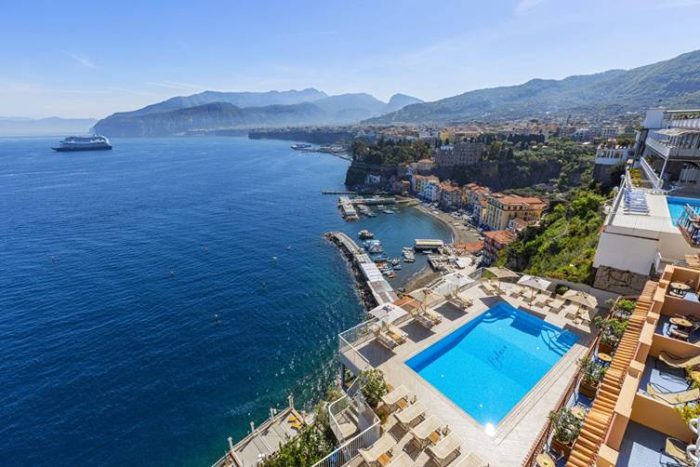
Dubai excels at providing everything a guest could want, often before they know they want it. The pace is exhilarating, but for many, the ultimate luxury is the freedom to slow down. At Hotel Belair Sorrento, slowing down is woven into the experience. The infinity pool seems to float above the Gulf of Naples, inviting hours of quiet contemplation. Breakfast is served on a terrace with Mount Vesuvius on the horizon, and there is no rush to leave. The hotel’s private yacht, the Pardo JTwo, is available for sunset cruises, but the journey is as unhurried as the destination. This is not a luxury of accumulation but of presence. It appeals to travelers who have experienced Dubai’s dynamism and now seek a different rhythm, one that aligns with the Italian philosophy of il dolce far niente, the sweetness of doing nothing.
Summer Season: A Time for Reconnection
April 1 marks the reopening of Hotel Belair for the summer season, a moment that locals and returning guests alike anticipate. For the Russo family, who have owned the property for over 60 years, it is more than a business date; it is a reunion. Staff who have worked together for decades return, the terraces are prepared, and the view over the Bay of Naples is as breathtaking as ever. As Dubai’s summer heat intensifies, luxury travelers often seek escapes that offer a gentler climate and a change of pace. The Sorrento coast, with its sea breezes and slower tempo, provides a natural complement to the energy of the Gulf. And for those who appreciate the art of genuine welcome, properties like Hotel Belair offer a counterpoint to the efficiency of modern luxury.
A Lasting Impression
Service in Dubai is impressive. Service in Italy is memorable. The difference lies in intention. Dubai’s luxury hotels aim to delight through perfection and anticipation. Italian hospitality, at its best, aims to make you feel known, valued, and at home. It is a difference that becomes most apparent not when you arrive but when you leave, and realize you are already planning your return. This summer, as Hotel Belair Sorrento opens its doors once more, it invites guests to experience that difference firsthand. In a world of constant motion, the art of welcoming remains one of the most enduring luxuries. For more information on their summer season and available experiences, visit Hotel Belair Sorrento